Are Automated Blog Posts Hurting SEO? 5 Signs
If you have been publishing blog posts on autopilot for a few months, you might have noticed that your organic traffic is not what it used to be. It is frustrating to invest in automation only to watch your rankings slide backward. The reality is that automated blog posts hurting seo is a common problem for businesses that rely on software without human oversight. In this post, we will help you identify the five specific signs that your automation strategy is causing damage. We will also give you a clear plan to fix the issues and protect your website’s future.
Sign 1: Your Traffic Dropped After You Started Automating
The first and most obvious sign of trouble is a decline in your organic traffic. Open your analytics dashboard and look at the date you turned on your automated blogging tool. Compare the three months before that date to the three months after it. If you see a steady downward trend, your automation is likely the culprit.
You should also look for a correlation with your posting frequency. If you went from two posts a week to ten posts a week, Google may be crawling your site more often and finding low value pages. A sudden spike in publishing often signals to search engines that you are prioritizing quantity over quality. This can lead to a drop in your site’s overall authority.
Finally, consider whether your automated posts are targeting the right keywords. Many tools scrape topics that are popular but not relevant to your local business. If your posts are about generic subjects instead of your specific services, you will attract the wrong audience. This mismatch confuses Google about your site’s main focus, which hurts your rankings for the terms that actually matter to you.
Sign 2: Your Posts Are Thin or Duplicate Content
If your traffic is dropping, the next step is to inspect the actual content your automation is producing. In our experience, automated blog content quality issues are almost always the root cause of SEO problems. Here are the key things you need to check in your publishing queue:
- Check word count: Are your posts under 300 words? Thin content like this provides no real value to readers and is a classic sign of automation.
- Run a plagiarism check on a sample: Use a free tool like Copyscape on five random posts. If they match other sites or your own previous posts, you have a serious duplicate content problem.
- Look for repetitive phrasing or templates: If every post starts with the same sentence or uses the same three adjectives, search engines will see them as low effort.
- Verify the facts and details: Automated tools often generate generic statements that are wrong for your area or your industry. Incorrect information damages your credibility.
When you see these issues, you are looking at why automated blogging is bad for seo. Search engines reward original content that answers a question better than anyone else. A template that just rearranges the same words does not do that. The fix is not to abandon automation, but to use it only for ideas and drafts.
Sign 3: Google Sent a Manual Action or Your Rankings Plummeted
A sudden and severe drop in rankings is a red flag that you cannot ignore. This is different from a gradual decline. If you wake up one day and your pages are gone from the search results, you need to act immediately. A google penalty for automated content is a real risk when your posts are clearly machine generated.
The first place to check is Google Search Console. Look for a notification under the "Security and Manual Actions" section. If you see a manual action, Google has specifically flagged your site for violating their spam policies. You will need to clean up your content and submit a reconsideration request.
Even without a manual action, you should watch for a sudden drop in rankings for your target keywords. If your main service pages fall out of the top 100 overnight, the algorithm has likely detected a pattern of low quality posts. This is the most severe consequence of automated blog posts seo problems. You can recover, but it takes time and effort to rebuild trust with the search engine.
Sign 4: Your Posts Have No Internal Links or Clear Structure
High quality blog posts guide the reader through the site. They link to your service pages, your contact page, and other relevant articles. Automated tools rarely do this well. When you review your recent posts, look for the following structural issues:
- Review posts for missing internal links to other pages: If a post mentions a service you offer, it should link to that service page. Without these links, you lose ranking power.
- Check if headings are used properly: Your posts should have H2 and H3 headings that break the content into logical sections. If the text is just one long block, readers will leave.
- Ensure posts are organized logically: Each paragraph should flow from the previous one. Automated content often jumps between unrelated topics.
- Confirm the posts have a clear call to action: What should the reader do after reading? If there is no next step, the post has no purpose for your business.
These structural problems make your content hard to read and hard for Google to understand. When your posts lack internal links, you are not passing authority to your important pages. This weakens your entire site over time.
Sign 5: Your Engagement Metrics Are Terrible
The final sign is how your audience interacts with your posts. Look at your bounce rate, time on page, and pages per session in your analytics. If visitors leave your site after a few seconds, they are not finding what they need. This is a direct signal to Google that your content is not satisfying the search query.
You should compare the metrics for your automated posts against any hand-written posts you have. If your manually written content has an average time on page of two minutes, but your automated posts have an average of twenty seconds, you have your answer. Low engagement signals low quality to Google. The algorithm uses these signals to decide whether to rank your page higher or bury it.
The reality is that readers can tell when a human did not write the content. They sense the lack of personality and specific detail. When they leave quickly, your site’s overall reputation suffers. This is one of the most common automated blogging mistakes to avoid, because it affects every other page on your domain.
How to Fix Automated Blog Posts Hurting SEO: A 5-Step Checklist
You do not have to delete your automation strategy entirely. The goal is to use it as a tool, not a replacement for human judgment. Here is a checklist to turn things around and address the automated blog posts hurting seo issue on your site:
- Audit your existing posts and remove or rewrite thin content: Go through your archive and delete any post under 300 words. For the rest, rewrite them to add real substance.
- Add unique value to each post: Include your own insights, a real example from a client project, or a specific data point from your business. This makes the content impossible to duplicate.
- Implement a human review process before publishing: Have a team member read every post before it goes live. They should check for accuracy, tone, and formatting.
- Incorporate internal linking and proper formatting: Add links to your service pages within the first few paragraphs. Use short paragraphs and descriptive headings to make the post scannable.
- Monitor your results and adjust your strategy: Track your traffic and rankings weekly. If a post does not perform, analyze why and change your approach for the next one.
Following this checklist will help you determine if automated blogging is safe for seo in your specific case. The answer is yes, but only with strict oversight.
Conclusion: Take Control of Your Automated Blogging
Automation is not the enemy, but ignoring its output is a mistake. The key takeaway is that automation can be used wisely if you treat the machine as a first draft generator, not a publisher. Every post still needs a human to verify facts, add local knowledge, and ensure it sounds natural. Without that oversight, you will continue to see the problems we outlined above.
Your website is one of your most valuable business assets. Do not let a shortcut destroy the authority you have built. If you are seeing any of these five signs and you are not sure where to start, our team is here to help. Contact us for a free audit of your current blog content and we will show you exactly what needs to be fixed. Remember, automated blog posts hurting seo is a real threat, but with the right approach, you can turn it around.
Part of our complete guide: Automated SEO Blogging for Local Businesses
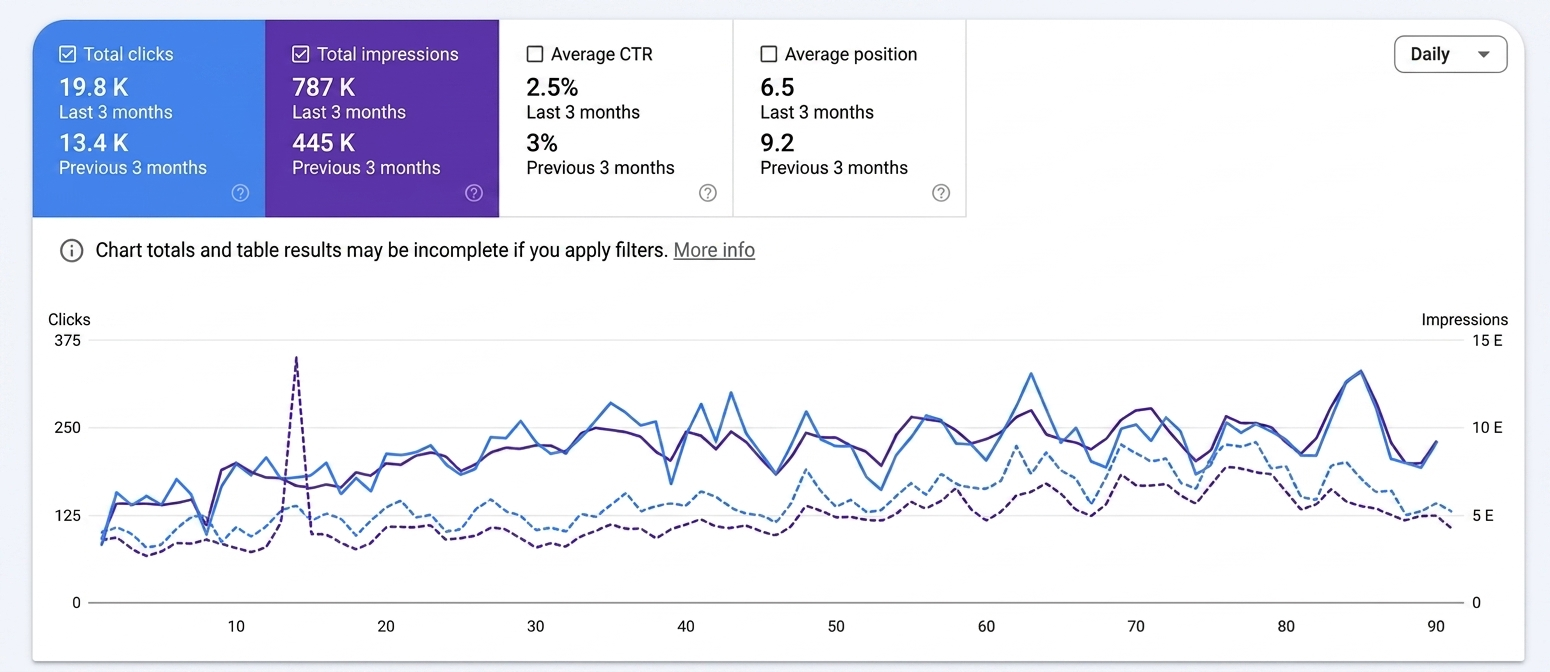
A post a day, every day, for 90 days. This is what that compounds into on a blog that starts from nothing.